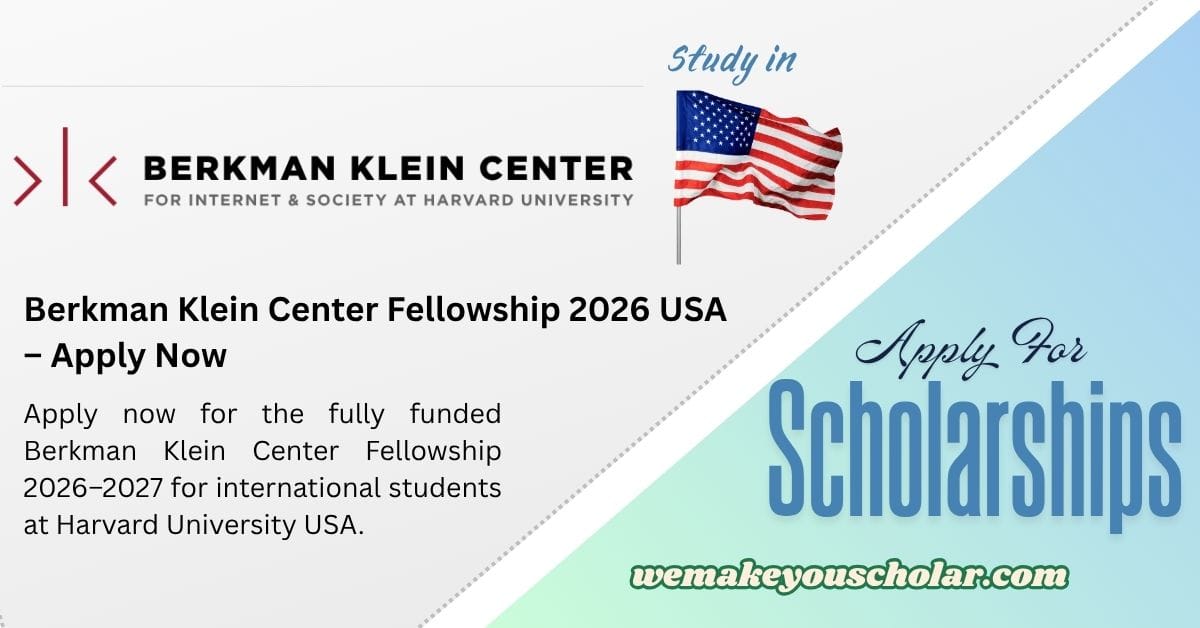
Berkman Klein Center Fellowship 2026–2027 USA – Apply Now
The Berkman Klein Center Fellowship 2026–2027 at Harvard University USA is now accepting applications from scholars, practitioners, and researchers interested in leading independent projects in AI, law, technology, and society. This fully funded fellowship provides unique opportunities to engage in interdisciplinary research, access Harvard resources, and contribute to public scholarship in AI governance, ethics, and human-centered technology.
About the Berkman Klein Center Fellowship
Founded in 1996, the Berkman Klein Center (BKC) at Harvard University has pioneered interdisciplinary research at the intersection of technology, society, and law. The fellowship program supports innovative research and public scholarship by providing fellows with mentorship, access to world-class resources, and a collaborative environment. Unlike traditional academic programs, the BKC fellowship values diverse experiences, multidisciplinary approaches, and practical contributions to society over conventional academic credentials.
Fellowship Duration and Appointment Periods
Fellows can apply for two appointment periods:
- January – August 2026: Up to 8 months of fellowship.
- September 2026 – August 2027: Full academic year fellowship.
Fellows are strongly encouraged to be in residence at the Harvard University campus in Cambridge, MA, though non-resident arrangements are considered on a case-by-case basis.
Research Priorities
The BKC Fellowship 2026–2027 focuses on several cutting-edge research areas:
Agentic AI
Research on agentic AI involves studying AI systems that act autonomously, interact with environments, and pursue objectives without human mediation. Fellows are encouraged to explore mechanisms for accountability, governance, and control of emergent AI behaviors.
Language Model Interpretability
Fellows may study interpretability of AI language models to understand their decision-making processes and ensure safe deployment in high-stakes environments. This includes developing standards, audits, and tools for non-technical stakeholders.
Benchmarking AI Systems Beyond Intelligence
Research should go beyond traditional AI intelligence metrics, focusing on social, ethical, and human-centric aspects like identity, agency, awareness, and theory of mind. Fellows will develop new benchmarks to guide policy, regulation, and ethical deployment of AI technologies.
AI & the Human Experience
This research priority focuses on studying AI’s impact on human relationships, creativity, cognition, and social-emotional development. Fellows may propose interventions and policy recommendations that preserve human dignity and agency.
Bridging the AI Triad
Fellows are encouraged to engage with diverse perspectives, including accelerationists, safetyists, and skeptics, to foster dialogue, collaboration, and thoughtful AI development and governance.
Who Should Apply?
The fellowship welcomes candidates from a variety of backgrounds, including:
- Academics: Faculty, postdoctoral scholars, or recently graduated Ph.D. holders.
- Practitioners: Industry, government, or civil society professionals with practical experience in technology, law, policy, or applied research.
- International Applicants: Eligible for visa sponsorship via Harvard International Office (HIO).
Eligibility Criteria
The BKC Fellowship program does not restrict applicants based on traditional academic credentials. Instead, it values:
- Interdisciplinary approaches
- Track record in research, policy, or civil engagement
- Ability to communicate with technical and non-technical audiences
- Commitment to public interest and open-source research
Recommended Academic & Technical Qualifications
For candidates pursuing technical AI research or engineering projects:
- Ph.D. or advanced degree in Computer Science or related technical fields
- Experience with Python, PyTorch, JAX, or similar frameworks
- Primary author publications or technical contributions in peer-reviewed conferences
- Hands-on experience with HPC systems, cloud orchestration (Kubernetes, Ray), and open-source AI frameworks
Recommended Practitioner & Non-Technical Profiles
- Policy, law, or technology professionals with research or public engagement experience
- Applicants from civil society or interdisciplinary backgrounds
- Ability to develop public scholarship projects, such as reports, op-eds, blogs, podcasts, or workshops
Fellowship Benefits and Support
The fellowship provides:
- Fully funded stipend up to $6,250 per month for eligible fellows, totaling $75,000 per 12-month period
- Access to Harvard University libraries, research centers, and campus resources
- Workspace at BKC offices on the Harvard Law School campus
- Opportunities for teaching, auditing classes, and mentorship within Harvard University
- Networking with interdisciplinary researchers, students, and practitioners
Application Process – Step by Step
Applications are open until Friday, December 5, 2025, at 11:59 PM ET. Applicants must submit:
- CV or Resume
- 1–2 page Cover Letter detailing background, motivations, and proposed contributions
- 2–3 page Project Proposal outlining research goals, methodology, and alignment with BKC priorities
- PDF of 1–3 Work Samples supporting the project proposal
- Contact information for two professional references
Additional Application Questions
Applicants are asked to indicate:
- Preferred fellowship period(s)
- Time commitment and residency plans
- Relevant BKC research priority alignment
- Primary discipline and sector
- Funding pathway (BKC stipend or external funding)
Expectations for Fellows
Fellows are expected to:
- Produce at least one public output contributing to scholarship or public policy
- Engage with the BKC community, faculty, students, and interdisciplinary researchers
- Participate in workshops, discussions, and mentorship activities
- Align work with BKC research priorities while advancing their own research agenda
Time and Location Commitments
Fellows should be free from major commitments to dedicate sufficient time to research. The BKC encourages in-residence participation at Cambridge, MA, but flexible arrangements may be negotiated.
Visa and International Applicant Information
The Harvard International Office (HIO) assists with visa sponsorship for eligible international fellows. Applicants must ensure they are legally eligible to receive stipends or funding if required.
Community Principles and Resources
BKC fellows benefit from Harvard University’s extensive community resources, libraries, and campus infrastructure. The program emphasizes diversity, inclusion, collaboration, and ethical engagement in technology and society.
Important Notes
- Fellows may need to manage tax reporting for stipends
- Workspaces, library access, and audit courses are available during in-residence periods
- Teaching engagements are not guaranteed but may be arranged case-by-case
How to Apply
All documents must be uploaded as PDFs (max 5MB each). Applications should be submitted through the official BKC fellowship portal before December 5, 2025. Applicants may apply for either or both fellowship periods and indicate funding preference.
Frequently Asked Questions (FAQs)
1. Is this fellowship fully funded?
Yes, eligible fellows may receive a stipend up to $6,250 per month, totaling $75,000 per year. Funding may also come from external sources for applicants with their own support.
2. Can international applicants apply?
Yes, international applicants are welcome. Harvard’s HIO assists with visa sponsorship for eligible fellows.
3. Do I need a Ph.D. to apply?
No, the BKC values diverse experience. Technical research applicants may benefit from a Ph.D., but practitioners with interdisciplinary experience are strongly encouraged to apply.
4. Are remote fellowships allowed?
While in-residence participation is preferred, non-resident arrangements may be considered depending on the fellowship project and candidate profile.
5. What research areas are prioritized?
Agentic AI, language model interpretability, benchmarking AI beyond intelligence, AI & human experience, and bridging AI communities are core priorities for this fellowship cycle.
Apply Now for the Berkman Klein Center Fellowship 2026–2027
Don’t miss this opportunity to join one of the world’s leading interdisciplinary research centers. Submit your application before December 5, 2025 and start your journey in advancing AI research, governance, and public scholarship at Harvard University USA.
Official Fellowship Link
Official Link: BKC Fellowship Portal
Contact Email : fe*********@***********rd.educ, hi*@*****rd.edu.